Cartesia vs Fathom
Cartesia and Fathom are both audio AI tools, tracked here on price, platforms, integrations, and capabilities. Every figure below is read from the vendor's own pages and dated. No score and no winner: the facts do the picking.
Cheapest paid tier each vendor publishes. Free plans are listed above; tiers priced on request are not plotted because there is no figure to plot.

Cartesia
Real-time speech synthesis, transcription, and voice agent platform
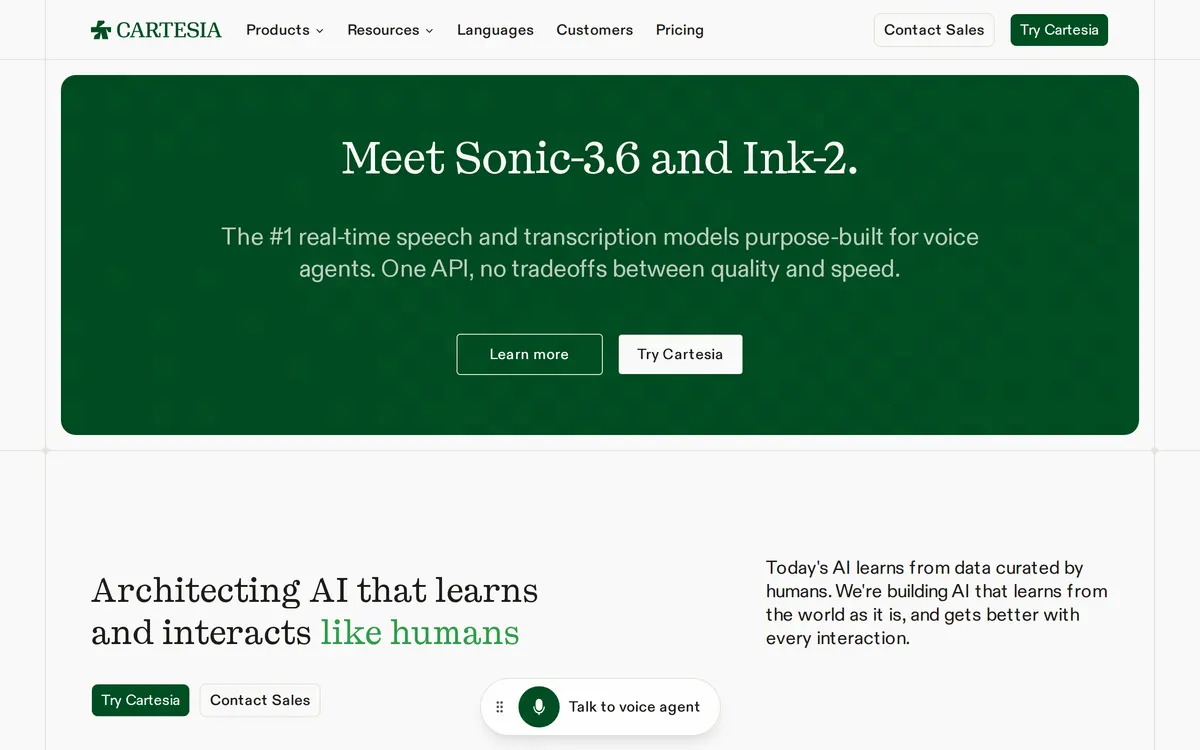
Cartesia provides real-time voice intelligence powered by state space models, featuring Sonic-3.6 for text-to-speech and Ink-2 for transcription. Developers can build voice agents through Managed Agents or deploy custom implementations across cloud, on-premise, and on-device environments. The platform includes developer SDKs, instant voice cloning, and telephony support.

Fathom
AI notetaking that summarizes meetings with or without a bot
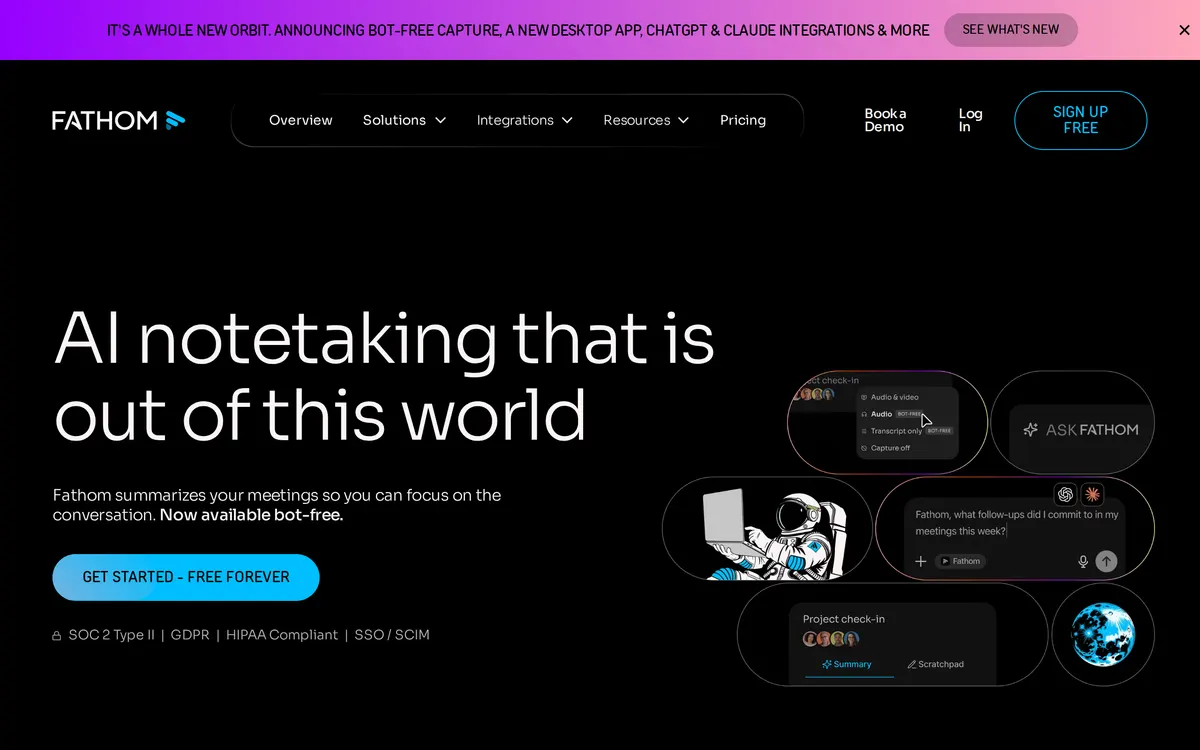
Fathom captures meeting recordings, generates instant summaries, and creates transcripts. Users can record calls using a meeting bot or through a bot-free capture option on Mac. The tool includes the Ask Fathom conversational assistant to search and query conversations.
At a glance
Capability tags are factual labels we assign when a tool is added; they describe what a tool does, not how well it does it.
Checked against the vendors. Written from each vendor's own site and last re-checked there: Cartesia (under review since September 3, 2026) · Fathom on September 8, 2026. Vendors change pricing and features without notice, so confirm anything that decides your purchase on the vendor's page.
Also in audio
A tool we have an affiliate relationship with. It is not part of the comparison above and we are not calling it the better pick.

- Creating realistic voiceovers for video and e-learning content
- Building low-latency real-time conversational voice agents
- Translating and dubbing videos into multiple languages
Key features
Cartesia
- Sonic-3.6 text-to-speech model
- Ink-2 streaming speech-to-text transcription
- Managed Agents for building and shipping voice agents
- Cloud, on-premise, and on-device deployment options
- Instant and professional voice cloning
Fathom
- Bot-free capture or standard meeting bot recording
- Automated AI summaries and action item generation
- Ask Fathom conversational search across call transcripts
- Automatic synchronization to CRMs and productivity apps
- Clips, highlights, and team playlists
What each one does well
Cartesia
- ✓ Building real-time conversational voice agents
- ✓ Low-latency streaming speech transcription and generation
- ✓ Deploying voice AI models on-premise or on-device
Fathom
- ✓ Automating meeting notes and post-call action items
- ✓ Syncing meeting summaries and deal context directly into CRMs
- ✓ Searching transcripts across calls with conversational AI
People also ask
Which is cheaper, Cartesia or Fathom?
Cartesia. Paid plans start at $5/mo for Cartesia and $15/mo for Fathom.
Does Cartesia or Fathom have a free plan?
Both. Cartesia and Fathom each publish a free plan.
What is the difference between Cartesia and Fathom?
Both are tracked for transcription. Of the capabilities they do not share, only Cartesia is tracked for text-to-speech, speech-to-text, voice-cloning, voice-generation, ai-agents, and only Fathom is tracked for meeting-notes, summarization, ai-search, ai-chat, workflow-automation.
How much do Cartesia and Fathom cost?
Cartesia: free plan, then $5/mo. Fathom: free plan, then $15/mo.
Answers are generated from the tracked plans and capability tags shown above, so they move when the vendors' pages do.
Full fact sheets, FAQs, and discussion links: Cartesia · Fathom · all audio tools