Cursor vs Windsurf
Cursor and Windsurf are both code AI tools, tracked here on price, platforms, integrations, and capabilities. Every figure below is read from the vendor's own pages and dated. No score and no winner: the facts do the picking.
Cheapest paid tier each vendor publishes. Free plans are listed above; tiers priced on request are not plotted because there is no figure to plot.

Cursor
AI-native code editor built on VS Code
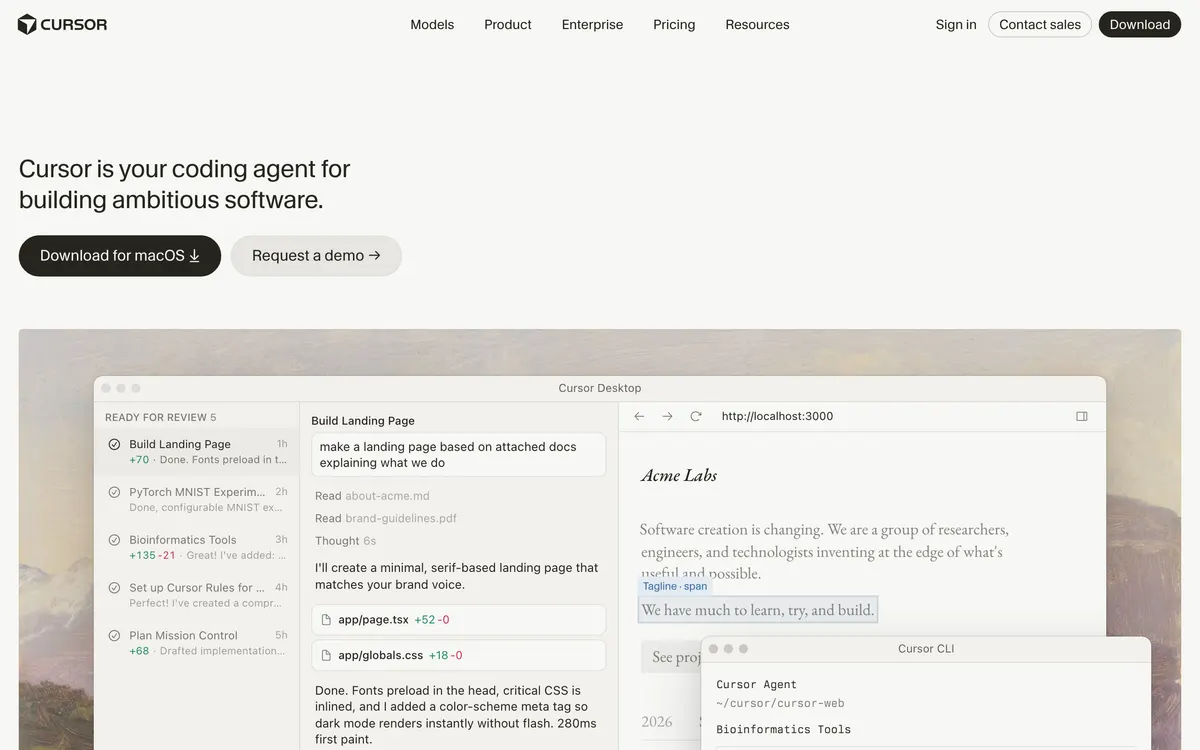
Cursor is a code editor forked from VS Code with AI assistance built into the core workflow. It can edit across multiple files from a natural-language prompt, answer questions about a codebase, and apply changes inline.

Windsurf
Agent-first coding IDE, now shipping as Cognition's Devin Desktop
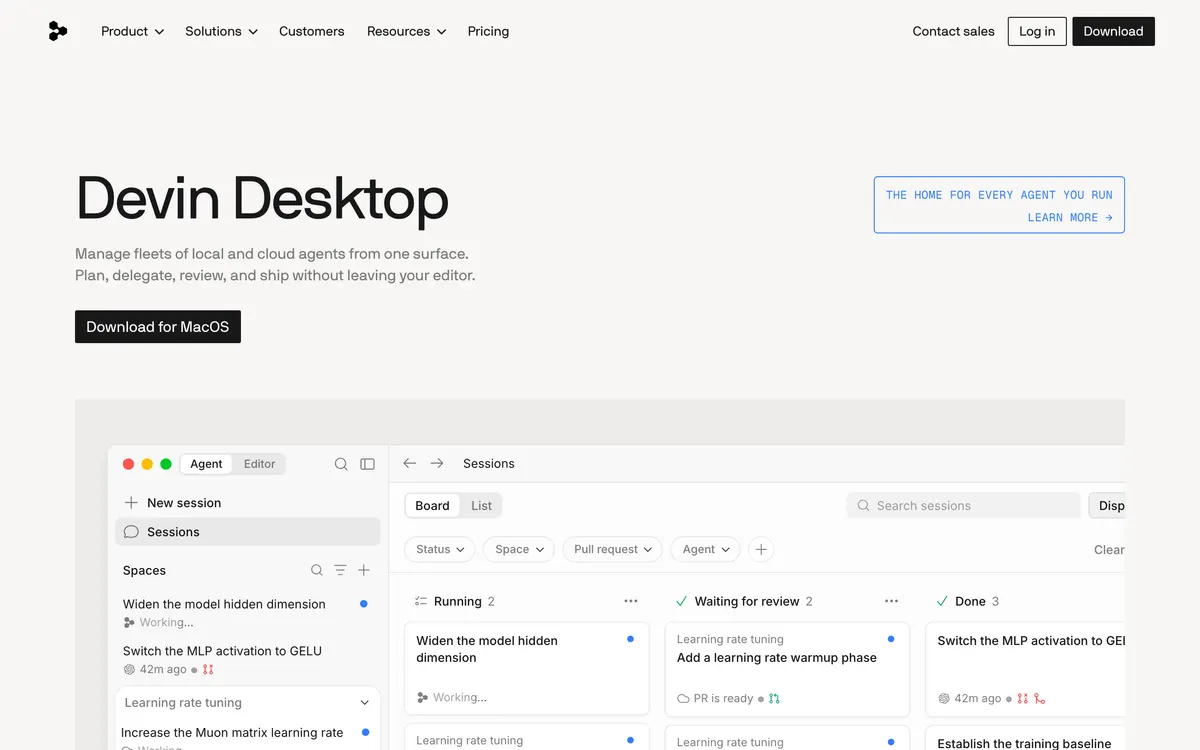
Windsurf is a standalone AI coding IDE from Cognition, the company behind Devin, and windsurf.com now redirects to it as Devin Desktop. It runs coding agents alongside a normal editor, with an Agent Command Center for supervising several at once. Plans start at a free tier, with Pro at $20 a month.
At a glance
Capability tags are factual labels we assign when a tool is added; they describe what a tool does, not how well it does it.
Checked against the vendors. Written from each vendor's own site and last re-checked there: Cursor on September 3, 2026 · Windsurf on September 3, 2026. Vendors change pricing and features without notice, so confirm anything that decides your purchase on the vendor's page.
Also in code
A tool we have an affiliate relationship with. It is not part of the comparison above and we are not calling it the better pick.

- Non-technical founders who need a site fast
- Freelancers and creators launching a portfolio or landing page
- Editing a site by chatting instead of writing code
Key features
Cursor
- Multi-file edits from a single prompt
- Codebase-aware chat and search
- Inline completions and refactors
- Works with existing VS Code extensions
Windsurf
- Agent Command Center for running several agents at once
- Kanban view for tracking agent tasks
- Fast Context codebase search
- Supercomplete predictive editing
- Multiple models via the Agent Client Protocol
What each one does well
Cursor
- ✓ Editing across many files from one natural-language prompt
- ✓ Understanding an unfamiliar codebase through chat
- ✓ Staying in a familiar VS Code environment while adding AI
Windsurf
- ✓ Supervising several coding agents on one codebase
- ✓ Working in an editor built around agents rather than autocomplete
- ✓ Teams that want agent tasks tracked on a board
People also ask
Which is cheaper, Cursor or Windsurf?
Neither. Cursor and Windsurf both start at $20/mo.
Does Cursor or Windsurf have a free plan?
Both. Cursor and Windsurf each publish a free plan.
What is the difference between Cursor and Windsurf?
Both are tracked for code-completion, codebase-context. Of the capabilities they do not share, only Cursor is tracked for code-editor, ai-chat, refactoring, and only Windsurf is tracked for ai-agents, agentic-coding, code-review, ide-integration.
How much do Cursor and Windsurf cost?
Cursor: free plan, then $20/mo. Windsurf: free plan, then $20/mo.
Answers are generated from the tracked plans and capability tags shown above, so they move when the vendors' pages do.
Full fact sheets, FAQs, and discussion links: Cursor · Windsurf · all code tools