Consensus vs Elicit
Where they differ
From the pricing tiers and capability tags we track. A capability missing on one side means we have not recorded it there, not that the tool cannot do it.
At a glance
Consensus and Elicit both appear in this directory's search listings. Prices below were read from the vendors' own pages, most recently on October 19, 2026. Elicit starts at $49/mo; no paid figure is confirmed for Consensus. We track answer engine on Consensus and documents on Elicit; both cover ai search and citations. No score and no winner: the facts do the picking.
Capability tags are factual labels we assign when a tool is added; they describe what a tool does, not how well it does it.
Checked against the vendors. Written from each vendor's own site and last re-checked there: Consensus on October 12, 2026 · Elicit (under review since October 19, 2026). Vendors change pricing and features without notice, so confirm anything that decides your purchase on the vendor's page.

Consensus
AI powered scientific search engine for peer reviewed research
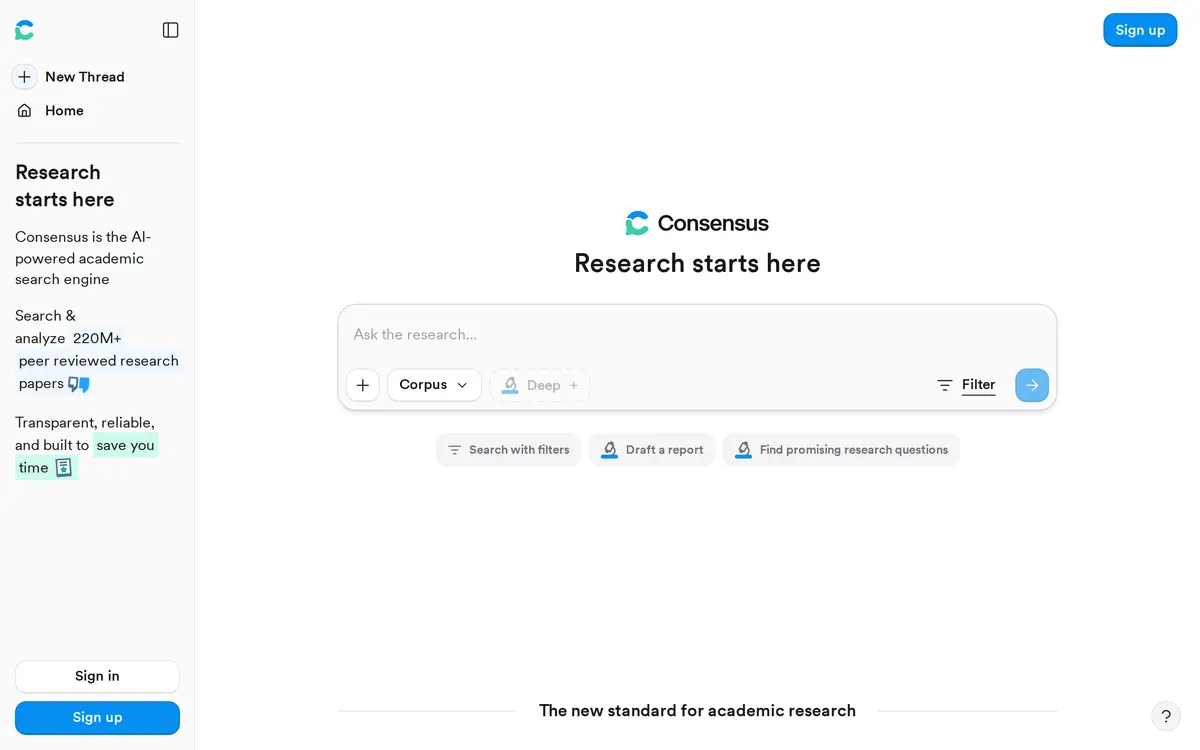
Consensus indexes over 200 million academic papers from PubMed, OpenAlex, and Semantic Scholar to deliver evidence-backed research answers. Its Consensus Meter visualizes scientific agreement across studies, linking each claim directly to source papers. Users can access the platform through a web application, REST API, or MCP server.

Elicit
AI research assistant for literature review and paper analysis
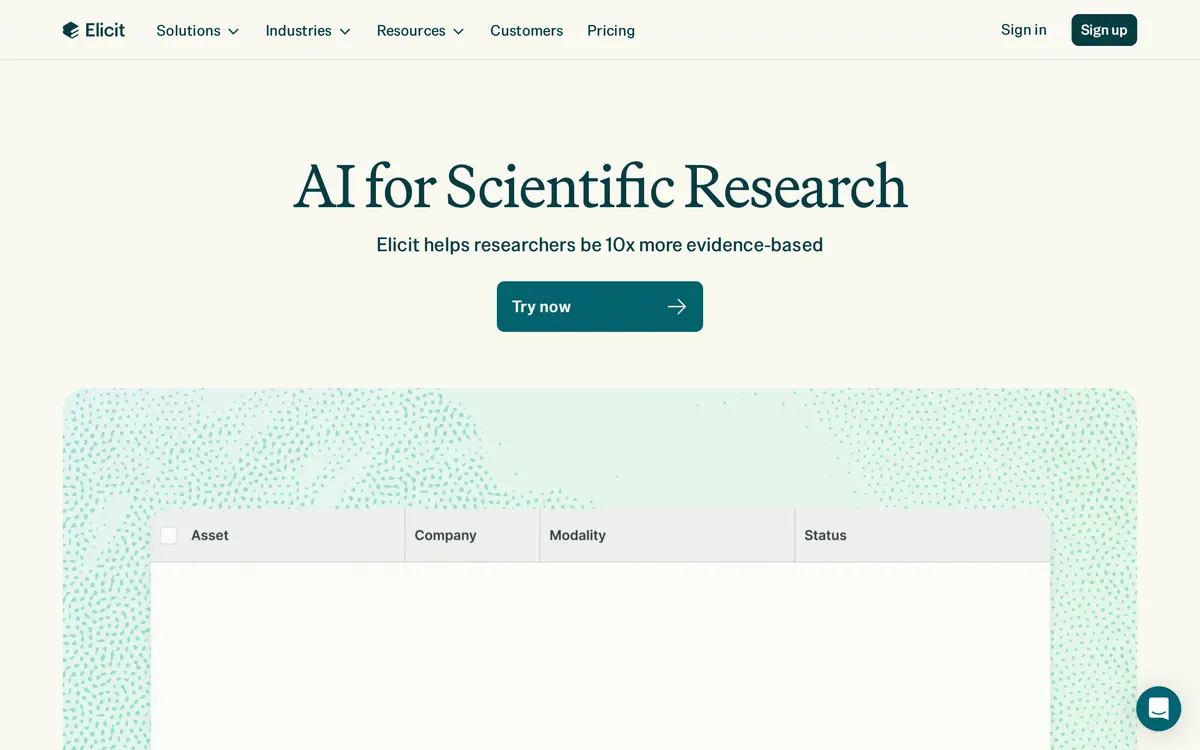
Elicit searches academic papers across the Semantic Scholar database of over 200 million publications to accelerate literature reviews. It extracts data, methodology details, and outcomes into customizable comparison tables. Users can also upload custom PDF documents to extract specific answers across multiple papers at once.
Also in search
A tool we have an affiliate relationship with. It is not part of the comparison above and we are not calling it the better pick.

- Tracking brand visibility across generative AI platforms
- Benchmarking AI search presence against competitors
- Researching prompt query volume and targeting keywords
Consensus and Elicit in action
Each vendor's own walkthrough, from its homepage or official YouTube channel. We don't make these videos and we don't rate them.
Consensus
Elicit
Key features
Consensus
- Consensus Meter to aggregate study verdicts into agreement distributions
- Medical mode filtering to clinical guidelines and top medical journals
- Natural language prompt parsing for timeframe and study design filters
- Model Context Protocol (MCP) server and REST API for agent workflows
Elicit
- Semantic Scholar literature search across 200M+ papers
- Custom PDF upload and batch data extraction
- Tabular paper comparison and synthesis
- Direct citation linking to source excerpts
What each one does well
Consensus
- ✓ Finding and synthesizing peer-reviewed research papers
- ✓ Visualizing scientific agreement on specific research questions
- ✓ Connecting AI agents to verified scientific citations via MCP or REST API
Elicit
- ✓ Synthesizing findings across dozens of academic papers
- ✓ Extracting methodology details into comparison tables
- ✓ Screening literature for systematic reviews
People also ask
Does Consensus or Elicit have a free plan?
Both Consensus and Elicit publish a free plan.
What is the difference between Consensus and Elicit?
Consensus and Elicit are both tracked for ai-search, citations, research, summarization. Of the capabilities they do not share, only Consensus is tracked for answer-engine, developer-api, and only Elicit is tracked for documents.
How much do Consensus and Elicit cost?
Consensus: free plan available. Elicit: free plan, then $49/mo.
Answers are generated from the tracked plans and capability tags shown above, so they move when the vendors' pages do.
Full fact sheets, FAQs, and discussion links: Consensus · Elicit · all search tools