Consensus vs Tavily
Consensus and Tavily are both search AI tools, tracked here on price, platforms, integrations, and capabilities. Every figure below is read from the vendor's own pages and dated. No score and no winner: the facts do the picking.

Consensus
AI powered scientific search engine for peer reviewed research
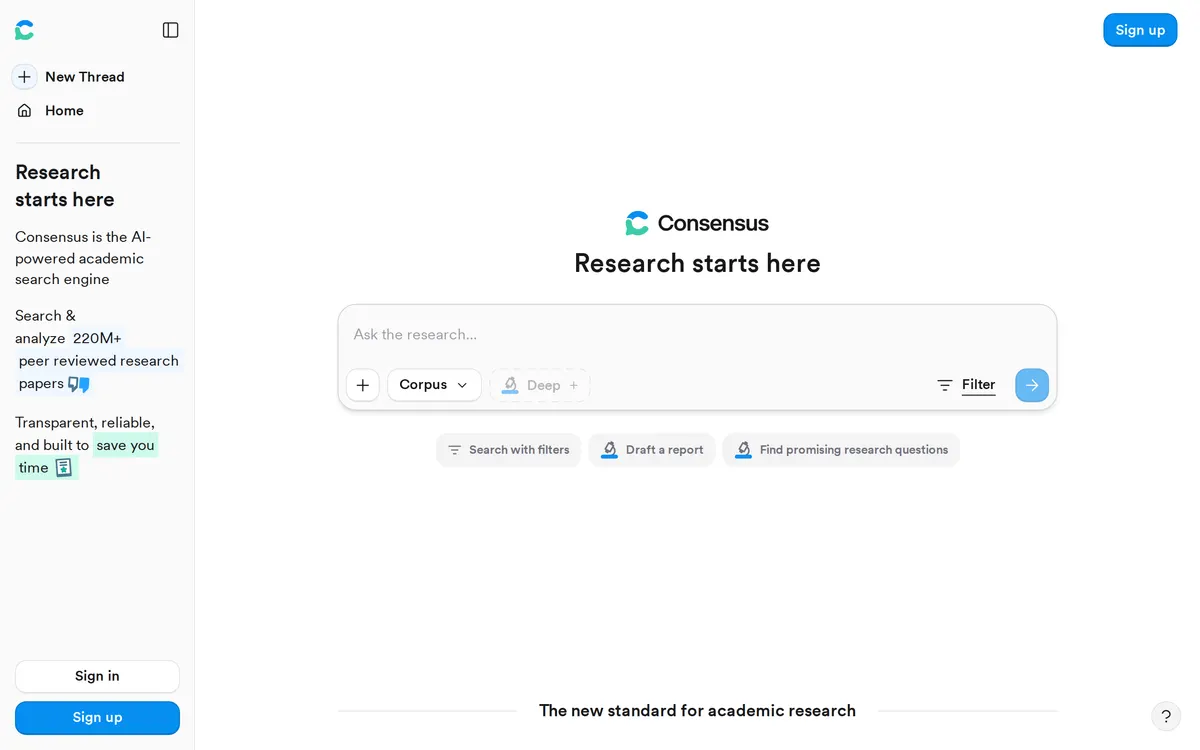
Consensus indexes over 200 million academic papers from PubMed, OpenAlex, and Semantic Scholar to deliver evidence-backed research answers. Its Consensus Meter visualizes scientific agreement across studies, linking each claim directly to source papers. Users can access the platform through a web application, REST API, or MCP server.

Tavily
The web search and content extraction layer for AI agents
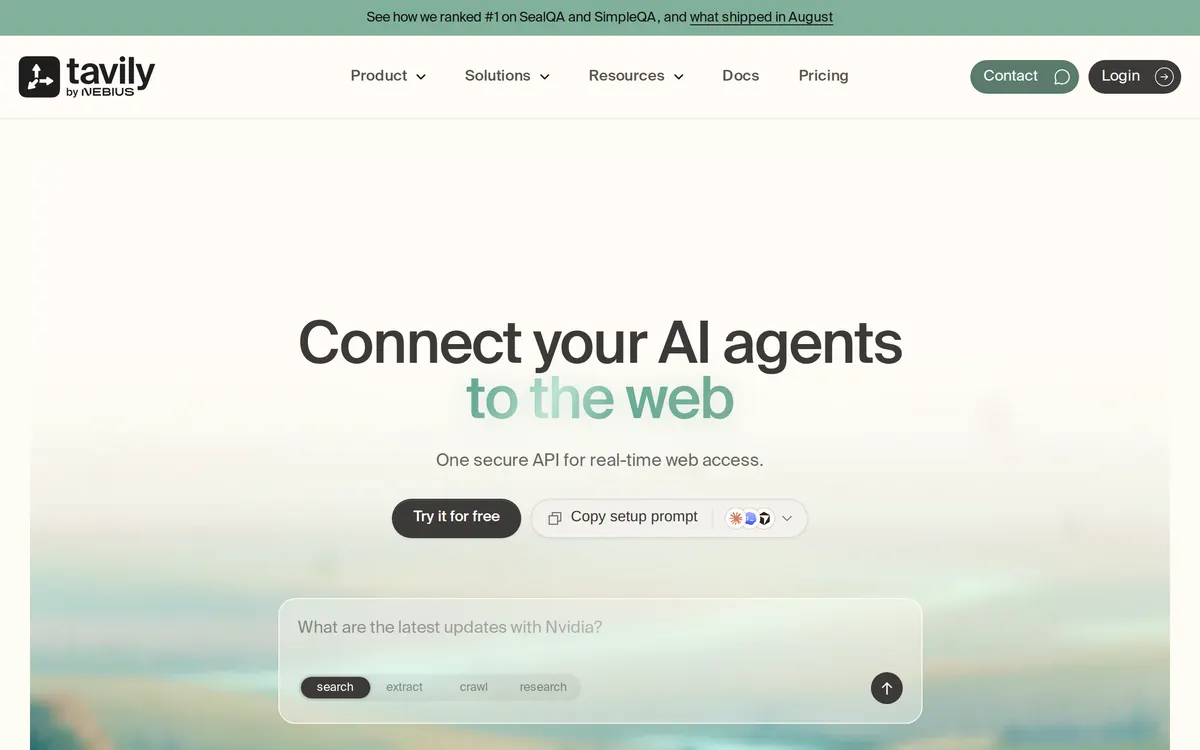
Tavily provides real-time web search, extraction, crawling, and research tools formatted for AI agents and LLMs. It features a p50 latency of 180 ms on search queries and delivers structured, chunked content instead of raw HTML. Developers can access it through Python and JavaScript SDKs, a CLI, or a remote Model Context Protocol (MCP) server.
At a glance
Capability tags are factual labels we assign when a tool is added; they describe what a tool does, not how well it does it.
Checked against the vendors. Written from each vendor's own site and last re-checked there: Consensus on September 7, 2026 · Tavily on September 6, 2026. Vendors change pricing and features without notice, so confirm anything that decides your purchase on the vendor's page.
Also in search
A tool we have an affiliate relationship with. It is not part of the comparison above and we are not calling it the better pick.

- Tracking brand visibility across generative AI platforms
- Benchmarking AI search presence against competitors
- Researching prompt query volume and targeting keywords
Key features
Consensus
- Consensus Meter to aggregate study verdicts into agreement distributions
- Medical mode filtering to clinical guidelines and top medical journals
- Natural language prompt parsing for timeframe and study design filters
- Model Context Protocol (MCP) server and REST API for agent workflows
Tavily
- Real-time web search optimized for AI context
- URL content extraction and graph-based website crawling
- Automated research tasks generating cited synthesis reports
- Built-in security layers blocking PII leakage and prompt injection
What each one does well
Consensus
- ✓ Finding and synthesizing peer-reviewed research papers
- ✓ Visualizing scientific agreement on specific research questions
- ✓ Connecting AI agents to verified scientific citations via MCP or REST API
Tavily
- ✓ Supplying live web context to AI agent workflows
- ✓ Generating cited research reports automatically from search queries
- ✓ Extracting clean text from URLs without parsing raw HTML
People also ask
Does Consensus or Tavily have a free plan?
Both. Consensus and Tavily each publish a free plan.
What is the difference between Consensus and Tavily?
Both are tracked for ai-search, citations, research, developer-api. Of the capabilities they do not share, only Consensus is tracked for answer-engine, summarization, and only Tavily is tracked for ai-agents.
How much do Consensus and Tavily cost?
Consensus: free plan available. Tavily: free.
Answers are generated from the tracked plans and capability tags shown above, so they move when the vendors' pages do.
Full fact sheets, FAQs, and discussion links: Consensus · Tavily · all search tools